How it works
A page writes a book onto your Ledger, and then has nothing more to do with it.
The book is free, and that is the whole offer
Every work here is in the public domain. The Great Gatsby came out of copyright in 2021. The press did not buy it, cannot own it and does not gate it.
The reader installs in about a minute and costs nothing. The book is then in the device: every page, three sizes of type, a bookmark that survives the power going off. No account, no connection, no second step.
What actually goes onto the device
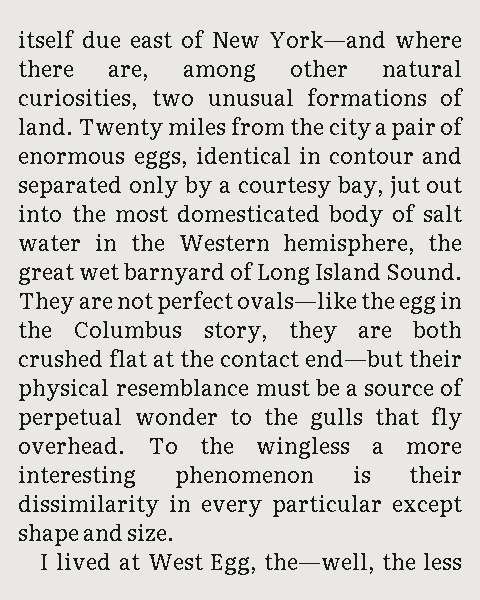
One app, and everything it will ever need is inside it: the text, the typeface it is set in, the cover, and an index of where every page begins so the device never has to lay the book out twice.
It has no network. It makes no keys, asks for no derivation path and never sees your recovery phrase. It draws text on a screen, which is the entire list.
The one thing it writes is your place in the book, so that unplugging the device does not lose it.
Why your device asks twice
Ledger keeps a catalogue, and an app in it installs quietly because Ledger has signed it. This app is not in that catalogue and was never submitted to it.
It installs anyway, and that is not a hole in anything: the device accepts a program signed by a key it has never seen, at a price. The price is that it stops and tells you. You will be asked to allow an unknown source, then to confirm the install, then for your PIN.
Read those screens. They are the only thing between your device and any page on the internet, including this one. A site that hurried you past them would be telling you something about itself.
Nobody checked this app but us.
The honest version of the pitch is that sentence, and it is why nothing here asks for money: you are being asked to trust a stranger far enough to read a book, and no further.
What the page does, precisely
The install runs in your browser, over the cable, using WebHID. It opens Ledger's own secure channel with a keypair invented in the tab and thrown away when you close it, then sends the app across in about eighteen hundred commands.
Nothing about you leaves the browser: no account, no sign-in, no analytics, and no server here that ever hears from your device. The only thing this site sends you is the book.
If it breaks halfway it cannot pick up where it stopped, because every command is chained to the one before it. Unplug, plug back in, start again. A half-written app is not a working one and the device will not pretend otherwise.
What this does not claim
- That we are Ledger. We are not, and they have not reviewed this.
- That the app is beyond doubt. It is unsigned. Trusting it is a judgement you are making, not one somebody made for you.
- That the device is unbreakable. It is the best available bet, and it is a bet.
What you need
A Ledger Flex, the cable it came with, and a desktop Chrome, Edge, Brave or Opera. Firefox and Safari cannot hold the cable, and neither can a phone.
Quit Ledger Live before you start. Only one program may hold the cable at a time, and that is the commonest way this goes wrong.